The Malawi 2063 Investment Plan (MIP-1) has fallen short of its ambitions because its financing framework outpaced the country’s capacity to mobilise resources, limiting development investment, an Oxfam Malawi study has shown.
The study, Evaluating Fiscal Strategies: The Interplay Between Debt Influence and Public Investments Decisions in Malawi shows that the scale of the financing challenge is significant, with sector strategies aligned to MIP-1 and the Sustainable Development Goals (SDGs) estimating that five key sectors alone require a combined K43.79 trillion.
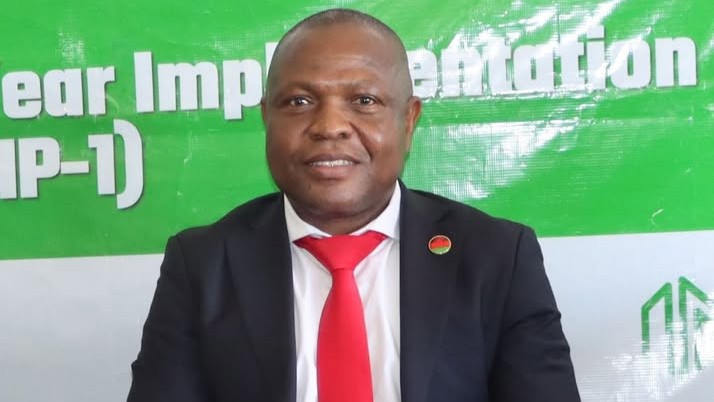
Commission: Changaya
Of this, K32 trillion is for health, K6.5 trillion for education, K1.95 trillion for electricity, K1.71 trillion for water and sanitation and K1.63 trillion for agriculture.
Electricity requirement is intended to raise national access from 25.9 percent to 70 percent by 2030, while the agriculture investment is aimed at supporting food security, commercialisation and climate-resilient production.
To bridge the financing gap, MIP-1 advocated non-traditional mechanisms including public-private partnerships, blended financing, local and international bonds, South-South cooperation and philanthropic funding, while government preferred grants and concessional loans for projects with high rates of return and significant multiplier effects.
Reads the study in part: “The financing mechanism was more aspiration just as the macroeconomic assumptions are overly optimistic and at variance with historical performance.
“Whether Malawi will achieve MIP-1 and MW2063 depends on efficiency of government expenditure.”
The study shows that unless Malawi changes the structure of its investment, the economy could reach lower-middle-income status only by 2041, compared with 2035 if it leverages agriculture, tourism and mining, or 2030 if manufacturing is revived alongside the three sectors.
MIP-1 assumed annual economic growth of six percent during its initial 2021/24 implementation period and inflation below 10 percent, but the plan was launched amid the Covid-19 shock, which reduced growth to 0.8 percent, followed by recurrent cyclones, fiscal imbalances, foreign exchange shortages, fuel shortages and import backlogs.
Malawi began to domesticate the SDGs through the Malawi Growth and Development Strategy III and later in MW2063, currently being implemented under MW2063 MIP-1.
Ironically, statutory obligations such as wages, debt interest, pensions have consumed an average of 94 percent of domestic revenue over the past four years, leaving minimal room for discretionary spending.
However, in the 2026/27 fiscal year, this ratio is projected to decline to 78.9 percent, creating K1.36 trillion in the new fiscal space, the most significant expansion in the MIP-1 era.
Scotland-based Malawian economist Velli Nyirongo observed that underfunding slows progress, weakens key systems and makes it harder for Malawi to move from ambition to real transformation outlined in MW2063.
“Limited and unreliable funding slows down the pace at which key projects and reforms can be carried out,” he said.
NPC director general Frederick Changaya said in an interview that in the face of funding constraints, it will prioritise modern and low financing models to advance the MW2063, the country’s long-term development plan.
He conceded that Malawi has significant headwinds due to funding constraints and shocks.